

Choosing Children’s Room Furniture: What Should Parents Look for Before Buying?
Choosing children's room furniture is not simply a matter of taste or color coordination. A piece that looks beautiful in a showroom may not necessarily be the right choice for the room, the child's needs, or everyday use.
That is why a good decision begins before the purchase itself: understanding the child's needs, measuring the available space, evaluating the furniture's quality and function, and then verifying the information provided by the seller or manufacturer.
The key idea is to learn how to evaluate a piece of furniture—not simply what to choose.

Start with the Child's Needs and the Room
Before thinking about color or design, ask yourself:
What does the child actually need at this stage? And what does the room need to make everyday use practical and comfortable?
What does the child need at this stage?
A child's needs change with age. What works well at one stage may become less practical later. For this reason, furniture selection should begin with its expected use, rather than with the appearance of the piece alone.
Think about how the room will be used:
- Does the child need a sleeping area?
- Storage for clothing?
- Space for organizing toys?
- A place for changing clothes or organizing essentials?
- Are there needs that may appear as the child grows?
The clearer the picture, the easier it becomes to identify the pieces the room actually needs and avoid buying furniture that does not serve a clear purpose. You can browse our Children's & Nursery Furniture collection to explore options suited to different stages and needs.
How do you know what the room actually needs?
Look at the room as a whole rather than at each piece of furniture separately.
First, identify the essential pieces, then think about how they will be arranged and how people will move between them. A piece may be excellent in terms of design and quality, but it may not be the right choice if it makes the room crowded or makes the rest of the furniture difficult to access.
The goal is not to fill the room with furniture, but to create a balanced space that works for both the child and the family. If you are looking to furnish the room as a whole, explore our Bedrooms - Kids & Babies collection for curated room essentials.
Why should you measure the room before choosing furniture?
Measuring is a simple step, but it is one of the factors that can have the greatest impact on the final decision.
It is not enough to know the overall size of the room. You should also consider the dimensions of the spaces available for each piece, the location of doors and windows, movement areas, and any fixed elements that may affect the furniture layout.
It is also useful to check the actual dimensions of every piece before buying it rather than relying on its appearance or estimating its size visually.

Evaluate Furniture for Quality and Function
Once you know what the room needs, the next important question is:
Is the piece actually well made?
Quality cannot be judged by the material alone, nor by appearance or price. A good piece of furniture is the result of several factors, including the material, manufacturing quality, finishing, stability, the performance of moving parts, and its suitability for everyday use.

Materials and manufacturing quality
Knowing the type of material is important, but it is not the only information you need.
Ask about the material used, how the piece was manufactured, and what information is available about it. If there are claims regarding emissions, chemicals, or other material characteristics, it is better if those claims can be verified rather than being presented simply as marketing descriptions.
A good material does not automatically mean that the entire product is suitable or of high quality. Manufacturing, assembly, and structural details are all part of the overall picture.
Details, finishing, and durability
Small details can reveal a great deal about the level of manufacturing.
Look at the quality of the finish, the consistency of the components, how doors and drawers operate, the stability of the piece, the quality of hinges and moving parts, and whether any components appear weak or unsuitable for the intended use.
However, do not try to make your entire judgment from a first visual impression. If important technical information is available, ask the appropriate source for it.
Is the furniture practical for everyday use?
Ask yourself how the piece will actually be used every day—not simply how it looks in a showroom.
Is it easy to access the drawers or shelves? Is the storage practical? Is the furniture easy to clean and maintain? Is the way it is used suitable for the child and family?
A piece can be beautiful and well made, but still not be the right choice if it is inconvenient for everyday use.
Does it meet the child's current and future needs?
Some furniture is designed for a specific stage, while other pieces can remain useful for longer.
When comparing options, do not look only at what the child needs today. Also consider whether the piece can remain suitable as the child's needs change—without compromising its current function.
Safety: What Should You Check?
After evaluating quality and function, safety should be considered as a separate part of the decision.
It is important not to rely simply on statements such as "safe for children." Safety is not a general description; it is related to the design of the product, how it is used, how it is assembled, and the specific type of furniture.
Stability and tip-over risk
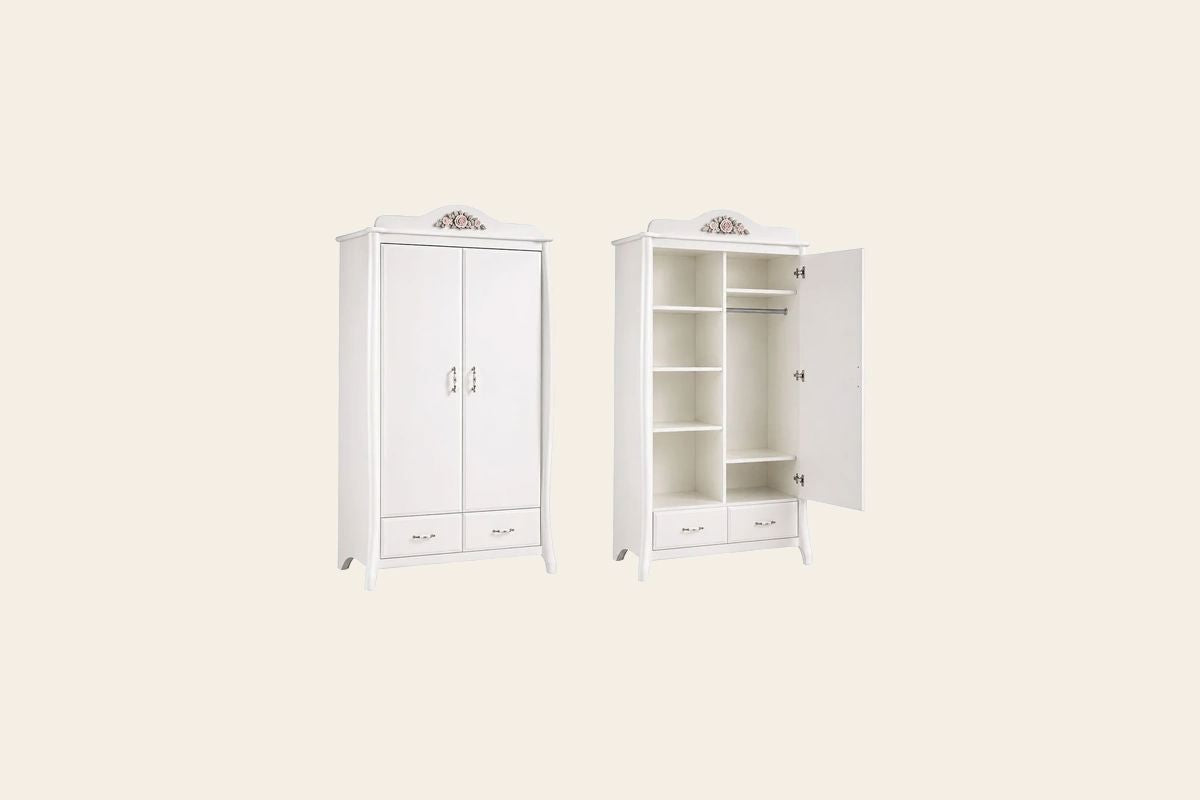
Furniture tip-over can cause serious injuries to children. Furniture that may be at risk of tipping should therefore be appropriately secured, following the manufacturer's instructions and using suitable anchoring methods. Heavier items should also be placed in lower areas when appropriate.
When buying a wardrobe, storage unit, or tall piece of furniture, do not ask only:
"Is it stable?"
Also ask:
"How is it secured? Is an appropriate anchoring method provided?"

Edges, corners, and openings
Examine the furniture from a child's perspective, not only from a design perspective.
Pay attention to edges, corners, protruding parts, openings, and any details that could present a risk depending on the child's age and the way the furniture will be used.
Remember that safety considerations are not the same for every type of furniture. A crib, wardrobe, bunk bed, and other products may have different safety considerations.
The importance of proper assembly and installation
Even a well-designed piece of furniture may not function as intended if it is not assembled or installed correctly.
Read the assembly instructions, make sure all necessary parts are available, and ask about installation and anchoring if the piece requires it.
Do not treat installation as a minor detail. It is part of how the furniture is designed to be used safely.
Why do safety considerations differ by furniture type?
It is a mistake to look for one safety rule that applies to all children's furniture.
Safety requirements vary depending on the type and function of the product. The right question is therefore about the requirements relevant to the specific piece—not simply whether the word "safe" appears in the product description.
The Bed and Mattress: What Should You Know Before Buying?
The bed and mattress require particular attention, especially when the furniture is intended for infant sleep.
It is important to distinguish between choosing a bed as a piece of furniture and the requirements for a safe infant sleep environment.

Is the bed appropriate for the child's stage?
Start by identifying the child's age and the intended use of the bed.
If the bed is intended for infant sleep, make sure it is a product designed for that purpose and meets the applicable safety requirements in the market where it is sold.
The American Academy of Pediatrics recommends that an infant's sleep surface be firm and flat, and that the sleep product meet relevant safety standards.
Is the mattress suitable for the bed?
The mattress should not be selected as a completely separate item from the bed.
Make sure the mattress is designed for the specific bed and fits it securely. HealthyChildren.org guidance emphasizes the importance of using a mattress designed for the crib and ensuring a proper fit.
For an infant sleep environment, Safe to Sleep® recommends a firm, flat, level sleep surface covered only with a fitted sheet.
Therefore, when buying a bed and mattress, do not rely only on the nominal size. Confirm the actual compatibility between the two.
What information should you know about the bed?
Before buying, look for essential information about the product itself:
- Age range or intended use
- Dimensions
- Mattress requirements
- Assembly instructions
- Any information relating to standards or safety requirements specific to the type of bed
If the information is unclear, that is itself a reason to ask more questions before making the decision.
How Can You Verify Information Before Buying?
This is one of the most important stages when choosing children's furniture.
A product may have an attractive description, but the question that helps you evaluate it properly is:
What is the evidence?
Do not rely only on terms such as "safe" or "high quality"
Words such as "safe," "natural," "non-toxic," "high quality," or "suitable for children" may sound reassuring, but on their own they do not tell you what was actually tested or verified.
When you hear an important claim, try to turn it into a more specific question:
What exactly does this statement mean, and what supports it?
This does not mean questioning every piece of information. It means distinguishing between a general marketing description and information that can actually be verified.
What information should be clear about the product?
The more important a piece of information is to your purchasing decision, the clearer and more specific it should be.
This may include:
- Product dimensions
- Materials used
- Use and assembly instructions
- Mattress information when buying a bed
- Any standard or certification the product is claimed to meet
If important information cannot be found or clearly provided, it is difficult to use it as a strong basis for comparison.
How can you verify material-related claims?
If a product is described as being made from a particular material or as having a certain level of emissions or environmental characteristics, do not rely on the name or description alone.
Look for clear information that can be referenced, such as product specifications, documentation supporting the claim, or a certification issued by an independent organization when such certification is actually relevant.
Some manufactured wood products, such as MDF or particleboard, may use adhesives or resins containing formaldehyde, and emissions can vary between products.
That is why asking for specific, verifiable information is more useful than relying on a general description such as "natural" or "healthy."
How should you understand certifications and standards?
A certification or standard can provide useful information, but it is important to understand exactly what it covers.
A certification does not necessarily mean that a product has passed every possible aspect of quality and safety. Some certifications focus on specific characteristics, such as chemical emissions.
So do not ask only:
"Is the product certified?"
Instead, ask:
- Who issued the certification?
- What does it test?
- What does it establish about this particular product?
What is the difference between documented information and a marketing claim?
The key difference is verifiability.
"Made from premium materials" is a general marketing description.
By contrast, identifying the material, providing a clear specification, or referring to a verifiable standard or certification provides more specific information that can be used when evaluating the product.
The more specific and verifiable the information, the more useful it becomes when comparing products.
What Questions Should You Ask Before Buying?
Once you understand what to evaluate, it becomes easier to turn that knowledge into direct questions for the seller or manufacturer.
Questions about size and suitability
- What are the actual dimensions of the piece?
- Will it fit the space where I plan to place it?
- How much space is needed around it for movement and use?
- If it is a bed, what mattress size is compatible with it?
Questions about materials and quality
- What materials are used to manufacture the piece?
- Are there clear specifications for the materials and finishes?
- Is there documented information supporting any claims about materials or emissions?
- How can I verify the information provided about the product?
Questions about safety and installation
- What are the safety considerations for this type of furniture?
- Does the piece need to be anchored to the wall?
- Are clear assembly and installation instructions provided?
- Are there any specific requirements for how it should be used?
Questions about the mattress when buying a bed
- Is the mattress designed for this bed?
- What size mattress is appropriate?
- Is there clear information confirming mattress compatibility with the bed?
- What are the instructions for using the bed and mattress?
Questions about after-sales support
- What does installation include?
- What happens if I need a replacement part or maintenance?
- Will use and assembly instructions remain available after purchase?
- Who should I contact if a problem occurs with the product?
These questions are not intended to make the buying process complicated. They are intended to make the decision based on clear information rather than first impressions.
How Can You Compare Two Pieces That Look Similar?
When two pieces appear similar, do not make price or appearance the only basis for comparison.
Consider a range of factors:
Size and suitability — Quality and manufacturing — Function — Safety — Documented information — Ease of use — Installation — After-sales support.
Then compare what you actually know about each piece.
If one product provides clear, verifiable information while the other relies more heavily on general descriptions, that is an important difference—even if the two pieces look similar.
Most importantly, ask yourself:
Which piece offers better value for the actual use I need?
A higher price does not automatically mean higher quality, and a lower price does not necessarily mean better value.
Common Mistakes When Choosing Children's Room Furniture
Buying before planning and measuring
Buying furniture first and then trying to find a suitable place for it can result in a crowded room or an impractical layout.
It is better to begin with the room's space and needs.
Choosing appearance before function
Design matters, but it is not the only factor.
A piece may be very attractive, but if it is not practical for everyday use, it may not be a good choice.
Relying only on price or marketing claims
Price alone does not tell you about manufacturing quality, and marketing statements are not enough to establish important claims.
Whenever an important piece of information influences your decision, ask:
What is the evidence?
Ignoring assembly and anchoring
Do not ask only whether the furniture is suitable. Also ask how it will be assembled, installed, and secured, and what it will require after it arrives at your home.
Not thinking about the child's changing needs
You do not have to choose everything based on the future. However, it is useful to understand whether a piece is tied to a specific stage or can remain practical as the child's needs change.
Checklist Before Buying Children's Room Furniture
Before making the final decision, review these points:
☐ I identified the child's and room's needs.
☐ I measured the room and the space available for each piece.
☐ I checked the actual dimensions of the furniture.
☐ I understood the function of each piece and how it will be used every day.
☐ I evaluated the manufacturing quality and finishing.
☐ I checked stability, edges, corners, and components that require attention.
☐ I determined whether the piece requires anchoring or special installation.
☐ I read the assembly and use instructions.
☐ I verified material-related information rather than relying only on marketing descriptions.
☐ If a certification or standard was mentioned, I identified who issued it and what it covers.
☐ If the product is a bed, I confirmed its compatibility with the appropriate mattress.
☐ I asked the questions I need clear answers to before buying.
☐ I compared the options based on value and use—not only price or appearance.
☐ I know what happens after purchase if installation, maintenance, or support is needed.
Frequently Asked Questions
What is the most important thing to consider when buying children's room furniture?
Start with the child's needs and the room's available space. Then evaluate the furniture's quality, function, and safety. Most importantly, verify essential information rather than relying only on impressions or marketing claims.
How do I know if children's furniture is suitable for my child's age?
Check the stated age range or intended use of the piece, and make sure its design and method of use are appropriate for the child at the stage when it will be used.
How should I measure the room before buying children's furniture?
Measure the actual space available for each piece, taking doors, windows, fixed elements, and movement areas into consideration. Then compare these measurements with the furniture's actual dimensions rather than relying on photographs alone.
Should a child's wardrobe be anchored to the wall?
Furniture that may be at risk of tipping should be appropriately secured to prevent tip-over, following the manufacturer's instructions and using suitable anchoring methods.
How do I know if children's furniture is well made?
Do not rely on the material or appearance alone. Look at manufacturing quality, finishing, stability, moving parts, function, and technical information that can be verified.
What should I ask about children's furniture materials?
Ask what materials are used and what information is available about finishes, emissions, or other characteristics claimed for the product. Most importantly, ask how that information can be verified.
Does more expensive furniture mean it is better?
Not necessarily. Price is one factor in the decision, but it does not by itself prove the quality or suitability of a product. Compare quality, function, safety, documented information, and the value the product provides for its actual use.
What should I know when buying a child's bed?
You should know the intended age range and use, dimensions, mattress requirements, assembly instructions, and relevant safety information.
For infant sleep, AAP and Safe to Sleep® guidance emphasizes a firm, flat, level sleep surface with a mattress appropriate for the bed and only a fitted sheet.
Should I choose furniture that can be used as my child grows?
Not necessarily in every case. The priority is that the furniture meets the child's current needs, while considering whether it may remain useful as those needs change—without sacrificing its current function.
Ready to start exploring? Browse our All Baby and Kids Furniture collection to find pieces that match your child's needs, your space, and your standards.

Written by Lamasat Nierah


Leave a comment
This site is protected by hCaptcha and the hCaptcha Privacy Policy and Terms of Service apply.